



At Omaha Functional Knee Clinic, our mission is to help people suffering from knee pain and joint dysfunction discover the true source of their discomfort and movement limitations.
We accomplish this through our comprehensive 4-Point Alignment & Stability Assessment, which evaluates all of the key regions that contribute to knee injury and dysfunction. This includes the foot, ankle, knee, and hip to identify the underlying mechanical imbalances affecting your movement.
Once we determine the primary causes of your pain and dysfunction, we utilize Active Alignment Therapy (AAT) to help restore balance and coordination throughout the joints, muscles, tendons, and ligaments. Our goal is to improve function, reduce stress on the knee, and help you move with greater comfort and stability.
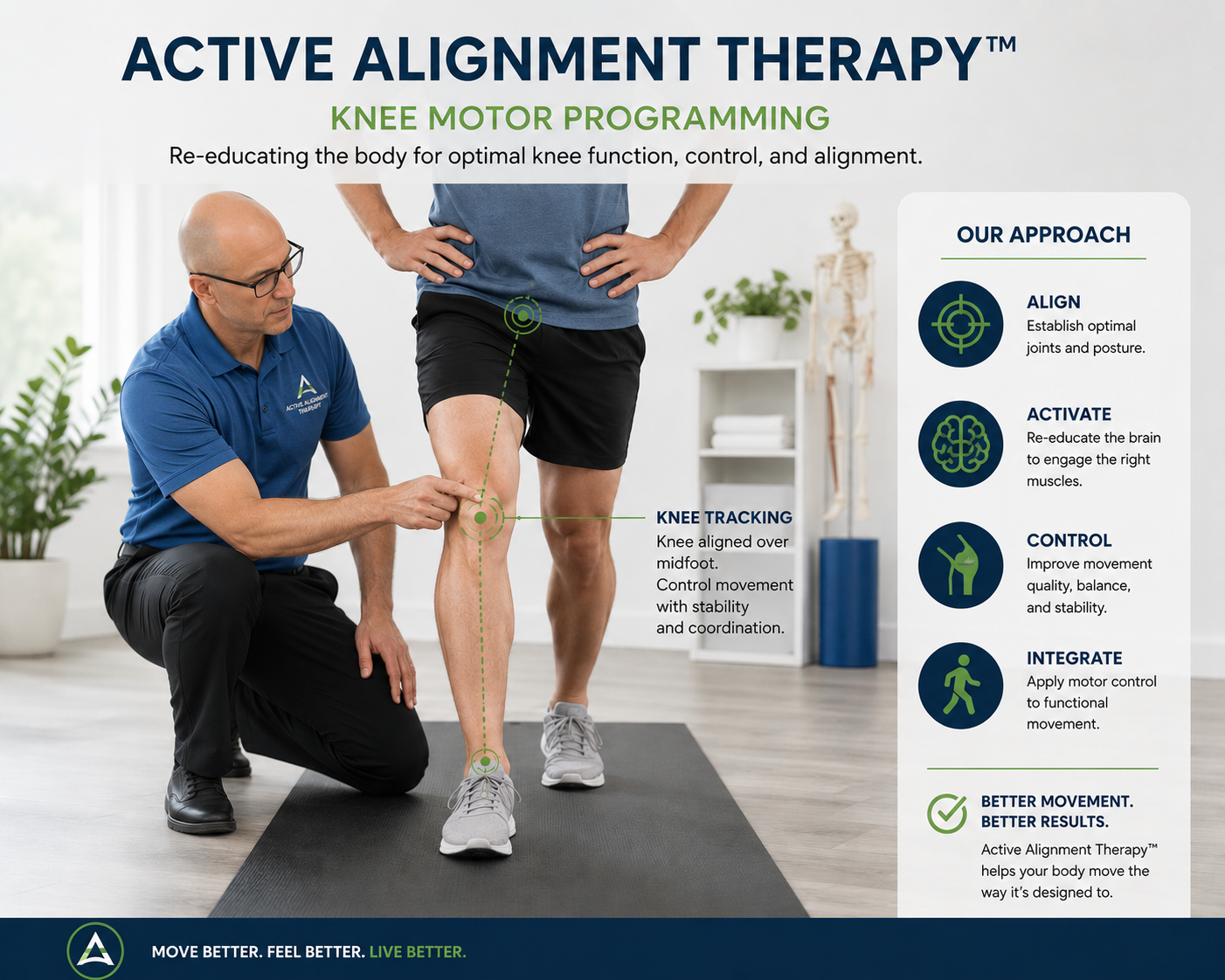
Active Alignment Therapy (AAT)
Active Alignment Therapy (AAT) is an advanced manual therapy approach designed to treat knee pain and joint dysfunction. This treatment focuses on improving the balance, coordination, and function of the muscles and joints that directly affect knee movement, including the foot, ankle, hip, and lower back.
By improving alignment and movement patterns, AAT helps restore proper knee joint mechanics during everyday activities such as walking, running, standing, sitting, and climbing stairs. This safe and effective approach can help reduce pain, improve stability, and support both the healing and prevention of knee injuries.
Common Symptoms of Knee Dysfunction
- Pain or inflammation in or around the knee joint or kneecap
- Secondary pain in surrounding areas such as the foot, ankle, calf, thigh, hip, or lower back
- Popping, clicking, or grinding noises in the knee
- Pain that worsens when going down stairs
- Pain that increases with prolonged sitting
- Stiffness or reduced mobility in the knee
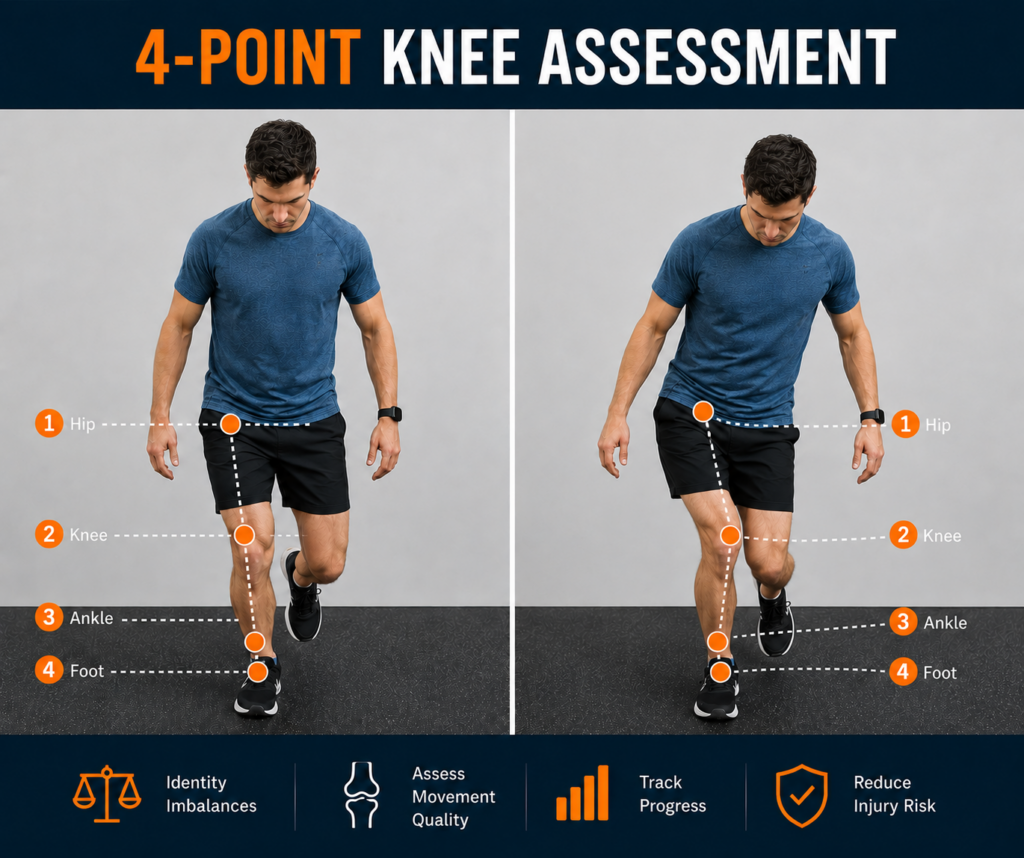
To accurately diagnose your knee dysfunction, we perform our 4-Point Alignment & Stability Assessment. This evaluation examines the key regions that influence knee function, including the foot, ankle, knee, and hip.
Once we identify your specific pattern of knee dysfunction, we will determine whether you are a good candidate for Active Alignment Therapy (AAT).
Patients who may NOT be an ideal candidates for AAT include those with advanced cartilage loss in the knee that may require surgical intervention (commonly referred to as “bone-on-bone” degeneration). X-rays may be necessary to properly evaluate these cases.
Patients with severe ligament tears may also not be suitable candidates for AAT. In these situations, an MRI may be recommended for further evaluation.
If you have had any recent knee imaging, please bring those images and reports with you to your first appointment.